

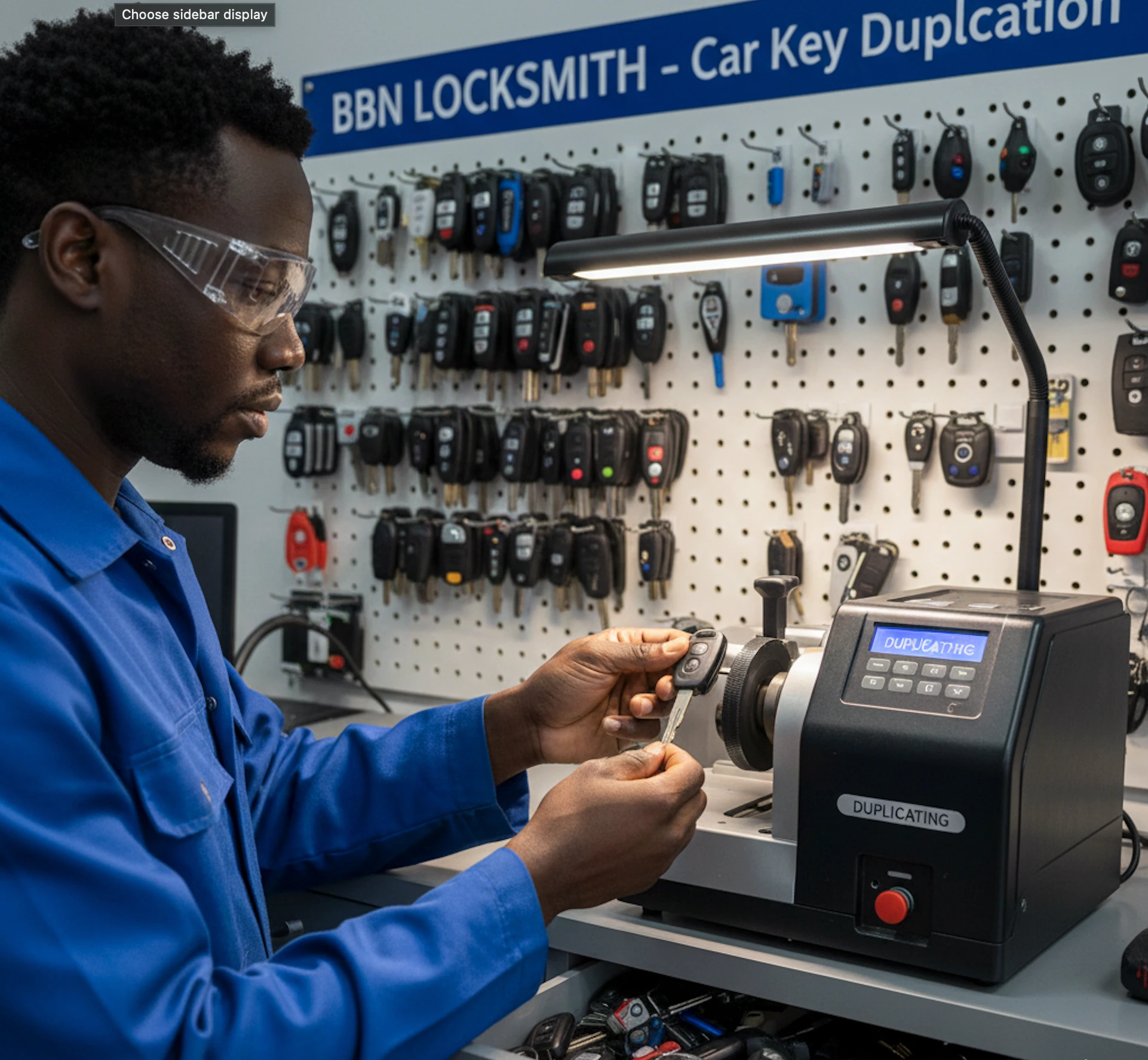
Transponder Keys Explained: What They Are & Why They Cost More
By BBN Locksmith
If you have driven a car made after the mid-1990s, you are almost certainly using a transponder key, even if you did not know it. These keys look similar to traditional metal keys but contain hidden technology that makes your car significantly harder to steal. That same technology is also why replacing one costs more than a simple key copy. Here is how it all works.
What Is a Transponder Key?
A transponder key contains a small electronic chip embedded in the plastic head of the key. The word “transponder” comes from combining “transmitter” and “responder.” When you insert the key into the ignition or bring it near the car’s receiver, the chip transmits a unique digital code.
Your car’s immobilizer system reads this code and compares it to the code stored in its computer. If the codes match, the engine starts. If the code is wrong or absent, the immobilizer prevents the engine from starting, even if the key turns in the ignition.
This means that even if someone copies the physical metal blade of your key perfectly, the car will not start without the correct transponder chip. This technology has been extremely effective at reducing car theft. According to automotive security studies, vehicles with transponder systems are stolen at significantly lower rates than those without.
Types of Transponder Keys
Not all transponder keys look the same. The technology has evolved over the decades, and different manufacturers use different formats.
Standard transponder key. This looks like a regular metal key with a slightly bulkier plastic head. The chip is inside the head and is not visible. Most domestic vehicles from the late 1990s through the 2000s use this style.
Key fob with integrated key. Many modern vehicles combine a remote fob with a transponder key blade. You press buttons on the fob for remote lock and unlock, and the key blade starts the car. The transponder chip is in the fob body.
Switchblade key. Popular with European manufacturers like Volkswagen and Audi, these keys have a metal blade that folds into the fob body when not in use. The transponder chip is housed in the fob.
Proximity smart key. The newest generation of car keys does not require insertion into an ignition at all. You carry the smart key in your pocket or purse, and the car detects it when you approach. A push button starts the engine. These contain a more advanced transponder chip that communicates continuously with the vehicle.
Why Transponder Keys Cost More
A traditional metal car key costs $2 to $10 to duplicate. A transponder key replacement typically runs $75 to $250 or more. Several factors drive this higher cost.
The chip itself has a cost. Transponder chips are not generic. Different manufacturers and even different model years use different chip types. Your locksmith or dealer needs to have the specific chip that matches your vehicle’s immobilizer system.
Programming is required. Cutting the metal blade is only half the job. The transponder chip must be programmed to communicate with your car’s specific immobilizer. This requires specialized diagnostic equipment that reads the car’s computer and writes the matching code to the new chip.
Equipment investment. The programming tools that automotive locksmiths use are expensive, often costing thousands of dollars. These tools require regular software updates to stay current with new vehicle models. This overhead is reflected in the service price.
Security restrictions. Some manufacturers restrict access to their programming protocols to prevent unauthorized key duplication. This means fewer providers can offer the service, and those who can must invest in maintaining authorized access.
Locksmith vs Dealership for Programming
You have two main options for getting a transponder key programmed: an automotive locksmith or your car’s dealership.
Dealerships have direct access to the manufacturer’s programming tools and can handle any model in their brand. However, they typically charge $200 to $500 for a replacement transponder key, the process often takes several days if the blank needs to be ordered, and you need to get your car to the dealership somehow.
Automotive locksmiths provide a faster, more affordable alternative for most vehicles. A mobile locksmith comes to your location with portable programming equipment and completes the job in about 30 to 60 minutes. Pricing is typically 30 to 50 percent lower than the dealership. See our full locksmith vs dealership comparison for more details.
For the vast majority of vehicles on the road today, a professional automotive locksmith can program transponder keys just as effectively as the dealership. The exceptions are typically very new models with proprietary systems that have not yet been reverse-engineered for aftermarket tools.
Can You Program a Transponder Key Yourself?
Some vehicles allow a basic self-programming procedure that involves a sequence of turning the ignition on and off with existing working keys. This is sometimes called “on-board programming” and is available on certain Ford, Toyota, and Mazda models, among others.
However, self-programming requires that you already have at least one or two working transponder keys. If you have lost all your keys, self-programming is not possible, and you will need a locksmith or dealer with professional programming tools.
There are also online sellers who offer “pre-programmed” transponder keys for specific vehicles. Be cautious with these. In most cases, the key blank may arrive cut correctly, but the transponder chip will still need professional programming to work with your specific car.
Protecting Your Transponder Key Investment
Given the cost of replacement, taking care of your transponder keys is worthwhile.
Get a spare made now. Having a backup transponder key is the single best thing you can do. If you lose your only key, the replacement cost and inconvenience increase significantly because the locksmith needs to start from scratch rather than cloning an existing key.
Keep the key away from strong magnets. While modern transponder chips are fairly resilient, prolonged exposure to strong magnetic fields can potentially damage the chip.
Avoid water damage. If your key goes through the washing machine or gets submerged, the chip may short out. Let it dry completely and test it. If it stops working, a locksmith can often reprogram a new chip using your existing blade.
Do not bend the key blade. A bent blade can damage the lock cylinder and is a sign that the key or lock needs attention.
Need a Transponder Key in the Austell Area?
BBN Locksmith provides mobile transponder key cutting and programming throughout Austell, GA, and the surrounding metro area. We carry key blanks and chips for most major makes and models and can have your new key working in under an hour, right at your location.
Call (470) 280-6544 for fast, affordable transponder key service. We are available 24/7.